
Generative AI for Ecommerce: Top 5 Use Cases, Benefits, and Challenges

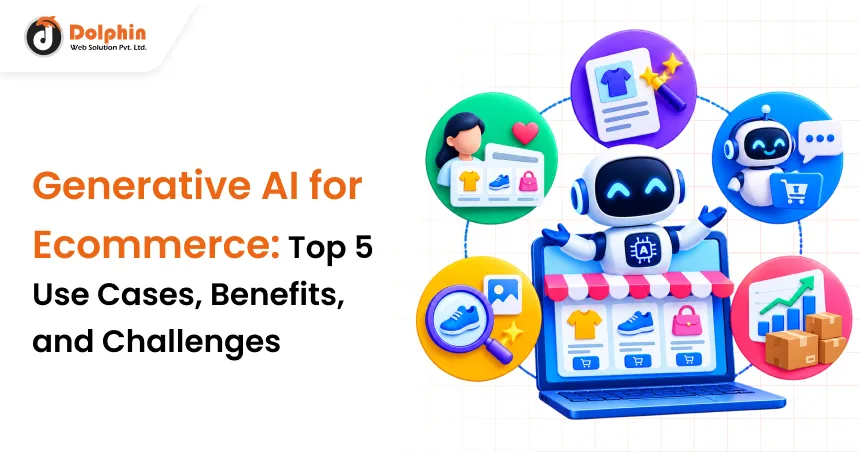

Table of Contents
 Show
Show

Summary :
This blog explores how generative AI is reshaping the ecommerce industry, from personalized shopping experiences and AI generated product content to smarter customer support and visual search. It covers the top five practical use cases, the measurable benefits ecommerce brands are seeing, and the real challenges companies face when adopting this technology, along with guidance on how to get started the right way.
Online shopping has changed more in the last three years than in the previous decade. Customers now expect fast answers, personalized product suggestions, and shopping experiences that feel tailored to them, not generic and templated. Generative AI is the technology quietly powering many of these upgrades behind the scenes.
From product descriptions written in seconds to chatbots that sound almost human, generative AI is helping ecommerce brands work faster, sell smarter, and serve customers better. But like any powerful tool, it comes with real tradeoffs that business owners need to understand before diving in.
In this blog, we will break down the top five ways ecommerce companies are using generative AI today, the tangible benefits this technology brings, and the honest challenges you should plan for. Whether you run a growing online store or manage ecommerce operations for an established brand, this guide will help you make informed decisions about where AI fits into your roadmap.
What Is Generative AI in Ecommerce?
Generative AI refers to systems that can create new content such as text, images, product recommendations, or conversations based on patterns learned from massive datasets. Unlike traditional automation, which follows fixed rules, generative AI adapts and produces original output every time, making it far more flexible for tasks like writing, designing, and personalizing customer interactions.
For ecommerce specifically, this means AI can now handle work that once required entire teams: writing product copy, generating marketing images, powering virtual shopping assistants, and predicting what a customer is most likely to buy next.
Top 5 Generative AI Use Cases in Ecommerce
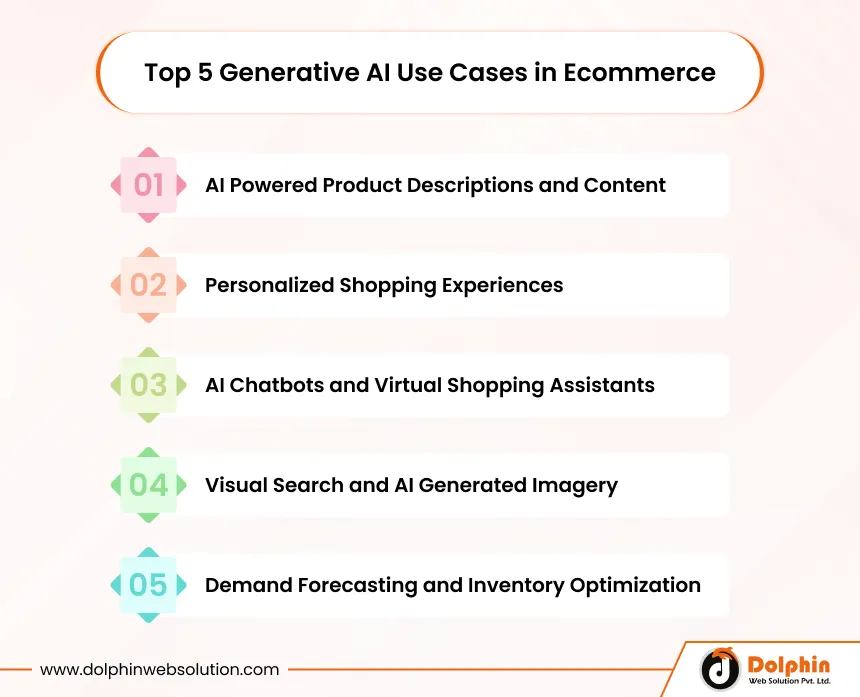
1. AI Powered Product Descriptions and Content
Writing unique, SEO friendly descriptions for hundreds or thousands of SKUs is one of the biggest bottlenecks for online retailers. Generative AI models can now produce accurate, brand consistent product copy at scale, pulling from product specs, images, and existing catalog data.
Instead of generic, repetitive listings, brands can generate descriptions that highlight key features, match brand tone, and are optimized for search engines, all within minutes rather than weeks.
2. Personalized Shopping Experiences
Generative AI analyzes browsing behavior, purchase history, and preferences in real time to create truly individualized shopping journeys. This goes beyond simple "customers also bought" suggestions. AI can now generate personalized email content, dynamic landing pages, and custom product bundles for each shopper.
This level of personalization has become a major differentiator, and many brands are turning to dedicated Generative AI Development to build these tailored recommendation engines directly into their platforms.
3. AI Chatbots and Virtual Shopping Assistants
Modern AI chatbots do far more than answer FAQs. Generative AI enables conversational assistants that can understand context, recommend products based on natural language queries, handle order tracking, and even negotiate returns, all while sounding natural rather than robotic.
These assistants reduce support ticket volume significantly while improving response times around the clock, which directly impacts customer satisfaction and retention.
4. Visual Search and AI Generated Imagery
Generative AI can create product photography variations, lifestyle images, and even virtual try on visuals without expensive photoshoots. Additionally, visual search tools powered by AI let customers upload a photo and instantly find matching or similar products in your catalog.
This is especially valuable for fashion, home decor, and lifestyle brands where visual discovery drives a large share of purchase decisions.
5. Demand Forecasting and Inventory Optimization
Generative AI models can simulate demand scenarios based on seasonality, trends, and market signals, helping businesses predict which products will sell, when, and in what quantity. This reduces overstocking, minimizes stockouts, and improves overall supply chain efficiency.
Combined with pricing intelligence, this use case alone can meaningfully improve profit margins for ecommerce operations of any size.

Benefits of Generative AI for Ecommerce Businesses
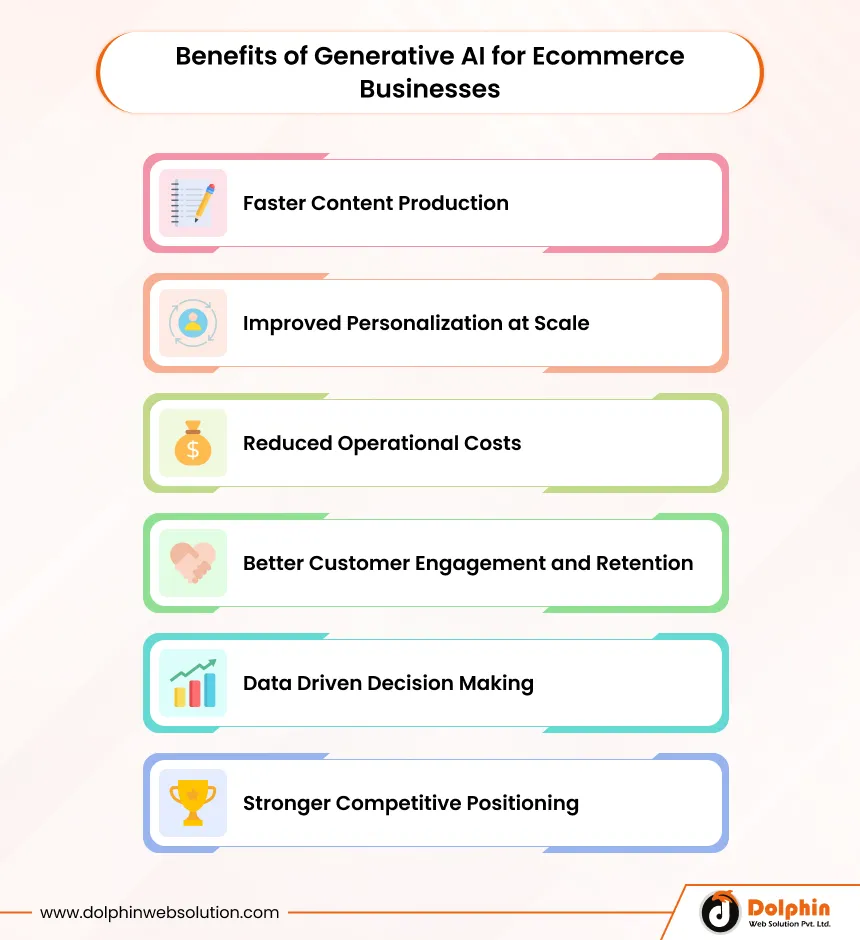
1. Faster Content Production
What once took content teams weeks can now be done in days. Generative AI can draft product descriptions, category pages, and marketing copy in bulk, giving writers a strong starting point instead of a blank page. This frees up your team to focus on strategy, storytelling, and refining tone rather than repetitive writing tasks that eat up hours every week.
2. Improved Personalization at Scale
AI makes it possible to deliver one to one personalization across thousands or even millions of customers at the same time, something manual processes simply cannot achieve. From personalized homepage banners to individualized email subject lines, generative AI adjusts messaging in real time based on browsing behavior, past purchases, and even time of day, creating a shopping experience that feels custom built for each visitor.
3. Reduced Operational Costs
Automating content creation, customer support, and inventory planning lowers overhead while maintaining or improving output quality. Businesses that once needed large seasonal teams to manage catalog updates or support tickets can now handle the same workload with a fraction of the staff, redirecting savings toward growth initiatives like paid marketing or product development.
4. Better Customer Engagement and Retention
Personalized recommendations and responsive AI assistants keep customers engaged longer and increase conversion rates. When a shopper feels understood rather than marketed to, they are more likely to complete a purchase, return for repeat orders, and recommend the brand to others, which compounds into long term customer lifetime value.
5. Data Driven Decision Making
Generative AI surfaces patterns in customer behavior that human teams might miss, such as subtle shifts in purchasing habits or emerging product trends. This allows leadership teams to make faster, more confident decisions about inventory, pricing, and marketing spend instead of relying on guesswork or outdated reports.
6. Stronger Competitive Positioning
Brands that adopt generative AI early are able to move faster than competitors still relying on manual processes. Whether it is launching new product lines with ready made content or responding to customer inquiries instantly, speed becomes a genuine competitive advantage in a crowded ecommerce market.
Challenges of Implementing Generative AI in Ecommerce
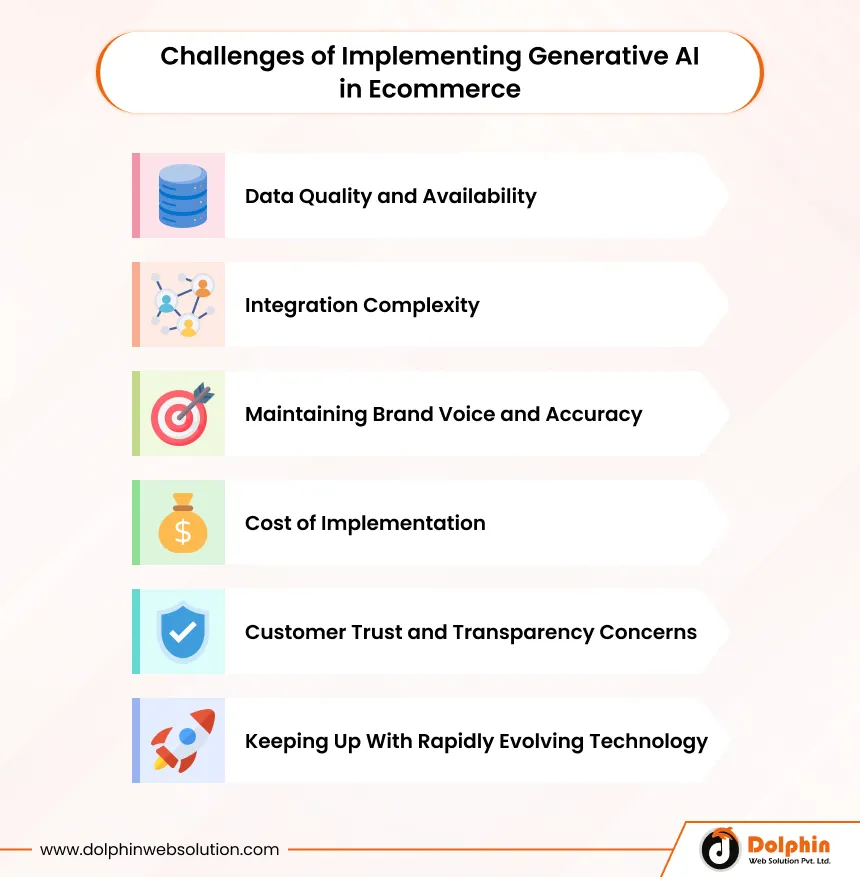
1. Data Quality and Availability
AI models are only as good as the data they are trained on. Incomplete product attributes, inconsistent formatting, or outdated customer data can lead to inaccurate or unhelpful AI output. Businesses often need to invest in data cleanup before AI tools can perform reliably, which is a step many companies underestimate.
2. Integration Complexity
Connecting generative AI tools with existing ecommerce platforms, CRMs, and inventory systems often requires custom development work rather than a simple plug and play setup. Legacy systems in particular can create compatibility issues that slow down implementation timelines and require experienced developers to resolve.
3. Maintaining Brand Voice and Accuracy
AI generated content needs careful oversight to ensure it stays on brand and factually accurate, especially for product claims, pricing details, and compliance sensitive information. Without a review process in place, AI output can drift from brand tone or introduce errors that damage customer trust.
4. Cost of Implementation
While long term savings are real, the upfront investment in tools, infrastructure, and skilled talent can be significant, particularly for smaller businesses without in house AI expertise. Choosing the wrong tools early on can also lead to costly rework down the line.
5. Customer Trust and Transparency Concerns
Some customers remain wary of AI generated content or automated interactions, especially when it comes to customer service. Brands need to be transparent about where and how AI is used, and ensure there is always a clear path to human support when needed, to avoid eroding customer confidence.
6. Keeping Up With Rapidly Evolving Technology
Generative AI tools and best practices are changing quickly, which means solutions that work well today may need updates within months. Businesses without a dedicated AI strategy often struggle to keep pace, making ongoing technical support and guidance an important part of long term success.

Why Trust and Expertise Matter When Adopting AI with Dolphin Web Solution
Generative AI is evolving quickly, and not every solution or vendor delivers real, measurable results. At Dolphin Web Solution, we have spent over 15 years building ecommerce platforms and, more recently, integrating AI capabilities into real world online stores across industries including fashion, electronics, and consumer goods.
Our team at Dolphin Web Solution takes a practical, experience driven approach rather than following hype. We evaluate each client's data infrastructure, customer base, and business goals before recommending any AI solution, because the right use case for one business may not be the right fit for another. This consultative process, backed by hands on delivery experience, is why ecommerce brands across the industry trust Dolphin Web Solution to guide their AI adoption rather than simply sell them software.
If you are researching vendors before making a decision, it is also worth reviewing our breakdown of the Top 10 Generative AI Development Companies to understand how different providers compare on experience, specialization, and delivery.
Conclusion
Generative AI is no longer a futuristic concept for ecommerce; it is a practical, revenue driving tool that leading brands are already using to personalize experiences, streamline operations, and scale content production. That said, successful adoption requires clean data, the right technology partner, and a clear AI Consulting strategy to understand both the benefits and the challenges involved.
Businesses that approach AI adoption thoughtfully, rather than rushing in without a plan, are the ones seeing the strongest long term results. Whether you are just beginning to explore AI or ready to build a custom solution, starting with the right strategy makes all the difference.
Frequently Asked Questions (FAQs)
What is generative AI in ecommerce used for?
It is used for tasks like writing product descriptions, personalizing shopping experiences, powering chatbots, generating marketing images, and forecasting demand.
Is generative AI expensive to implement for small ecommerce businesses?
Costs vary based on scope. Many businesses start with smaller use cases like AI generated content before scaling into more advanced applications like personalization engines.
Can generative AI replace human content writers for ecommerce?
Not entirely. AI speeds up content production, but human review is still important for accuracy, brand voice, and quality control.
How does generative AI improve customer experience online?
It enables personalized recommendations, faster support responses, and more relevant search results, all of which make shopping feel more tailored to each customer.
What industries within ecommerce benefit most from generative AI?
Fashion, beauty, home goods, and electronics see particularly strong results due to high product volume and visual driven shopping behavior.
How do I know if my business is ready for generative AI?
Readiness depends on data quality, existing tech infrastructure, and clear business goals. A consultation with an experienced AI partner can help assess this before investing.
Nimesh Patel


Nimesh Patel is the Managing Director of Dolphin Web Solution, a global eCommerce, AI, and software development company helping businesses accelerate digital growth. With over 15 years of experience in technology consulting and product development, he has successfully guided startups, SMBs, and enterprise organizations in building scalable digital solutions. Nimesh specializes in eCommerce development, custom software solutions, mobile application development, and digital transformation strategies. Throughout his career, he has worked closely with businesses across retail, healthcare, automotive, manufacturing, and technology sectors, helping them leverage modern technologies to improve operational efficiency and customer experiences. As a business leader, Nimesh is passionate about innovation, entrepreneurship, and helping organizations turn ideas into successful digital products. His insights focus on eCommerce growth, AI adoption, software development trends, and business transformation through technology.

We can help you with
- Dedicated Team
- Setup Extended Team
- Product Development
- Custom App Development
Our Offices

AHMEDABAD (INDIA)
B- 203-206, Empire Business Hub, Science City Road, Sola, Ahmedabad – 380060

BERLIN (GERMANY)
Badensche Str. 28, 10715 Berlin, Germany

CALIFORNIA (USA)
9601 Reseda Blvd, Apt#223, Northridge CA-91324, USA

ALBERTA (CANADA)
302 Skyview Ranch Drive NE, Calgary, Alberta, Canada T3N0P5





Hello!
Click one of our contacts below to chat on WhatsApp