
-
Dolphin Web SolutionMobile AppWeb App vs Mobile App Comparison: Which Is Right for You?
 15 Min
Web App vs Mobile App Comparison: Which Is Right for You?


Table of Contents
 Show
Show

Summary :
Choosing between a web app and a mobile app can greatly affect your business’s success, user experience, and costs. This blog compares their functionality, performance, cost, and engagement, showing that web apps are browser-accessible and budget-friendly, while mobile apps offer faster speed, offline use, and native features.
In today’s digital world, applications are vital in how businesses connect with users. Choosing between a web app vs mobile app can significantly impact your business’s success, user experience, and development costs. In this blog, we’ll compare these two platforms to help you make the right decision.
What is a Web App?
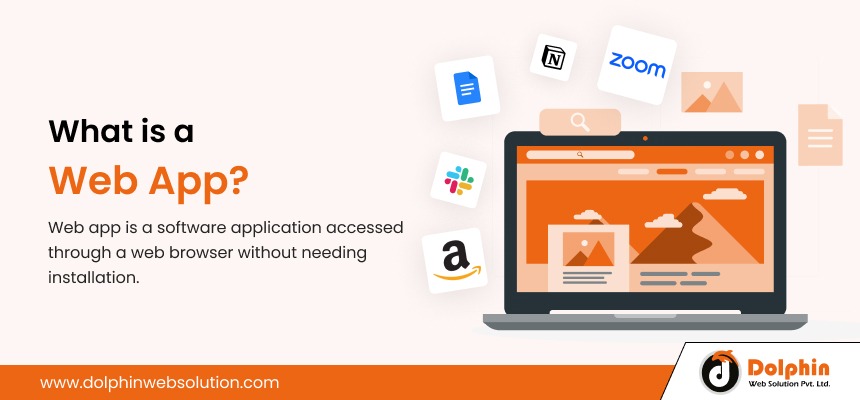
A web app is a software application accessed through a web browser without needing installation. It typically requires an internet connection and works across multiple platforms. Examples include Gmail, Google Docs, and Trello’s web version. Businesses often choose web apps for their broad accessibility and cost efficiency, especially for SaaS platforms and informational tools.
What is a Mobile App?
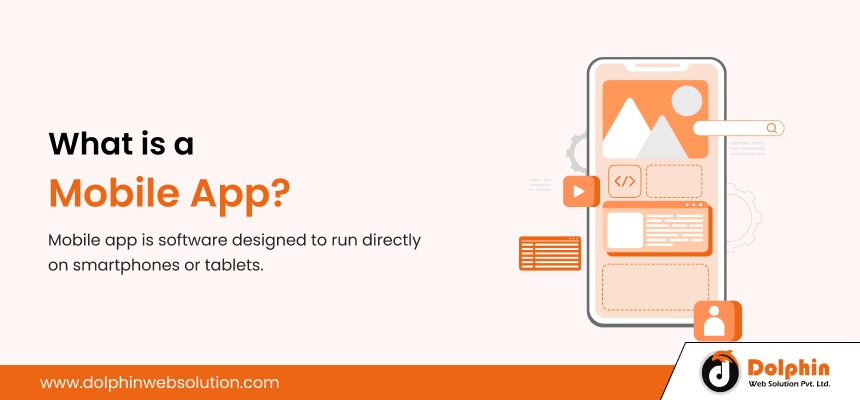
A mobile app is software designed to run directly on smartphones or tablets. They come in two main types: native apps, built specifically for iOS or Android, and hybrid apps, which combine web technologies with native features. Popular examples include WhatsApp and Instagram. Mobile apps can access device features like GPS, camera, and offline storage, offering richer user experiences.
Understanding the Core Differences Mobile App vs Web App?
| Feature | Web App | Mobile App |
|---|---|---|
| Development Cost | Lower cost, single codebase for all platforms | Higher cost, separate versions for iOS and Android |
| Development Time | Faster development and deployment | Longer development due to platform-specific coding |
| Platform Dependency | Runs on any device with a web browser | Platform-specific (iOS, Android) |
| User Experience (UX) | Limited device integration, browser-based | Rich, native experience with full device access |
| Internet Dependency | Requires internet connection | Can work offline |
| Performance & Speed | Dependent on browser and network speed | Faster, optimized for device hardware |
| Updates & Maintenance | Instant updates, no user action needed | Updates require app store approval and user download |
| Access to Device Features | Limited (camera, GPS, sensors) | Full access to hardware and OS features |
| Discoverability | Easily found via search engines | Found via app stores |
| Installation | No installation needed, accessed via URL | Requires download and installation |
Pros and Cons of Web Apps
Pros and Cons of Mobile Apps
When Should You Choose a Web App?
Choose a web app if you want to reach a broad audience quickly and cost-effectively. Web apps are ideal for startups, MVPs, SaaS platforms, and informational tools where cross-platform accessibility is crucial. They require no installation, update instantly, and work well when internet connectivity is reliable. If your goal is to minimize development time and cost while maximizing reach across devices, a web app is the right choice.
When Should You Choose a Mobile App?
Opt for a mobile app when performance, offline access, and deep device integration are priorities. Mobile apps are best suited for businesses focusing on user engagement, ecommerce, gaming, or services needing features like GPS, camera, and push notifications. They provide a smoother, faster experience and can work without an internet connection. If your audience expects a native, highly interactive experience and you have the resources for higher development and maintenance costs, a mobile app is the better option.
Conclusion
There’s no one-size-fits-all answer when choosing between a web app and a mobile app. Your decision should be based on factors such as your target audience, budget, required features, and long-term goals. Web apps are ideal for faster launches and wider accessibility, while mobile apps excel in performance, offline capabilities, and deeper user engagement. If you’re considering mobile app development, let our expert team help you make the right choice and build a powerful, user-friendly application tailored to your needs. Contact us today for a free consultation!

Jigar Shah


Jigar Shah serves as the Chief Operating Officer of Dolphin Web Solution, overseeing business operations, project delivery, client success, and organizational growth initiatives. With more than 15 years of experience in the IT and digital services industry, he plays a vital role in ensuring operational excellence and delivering exceptional outcomes for global clients. His expertise spans strategic planning, project management, process optimization, resource management, and technology operations. Jigar has successfully managed complex eCommerce, AI, web, and mobile application projects while building scalable processes that support sustainable business growth. Passionate about leadership and continuous improvement, Jigar focuses on creating efficient systems, empowering teams, and maintaining the highest standards of quality. He frequently shares perspectives on digital transformation, project execution, operational efficiency, and business growth strategies.

We can help you with
- Dedicated Team
- Setup Extended Team
- Product Development
- Custom App Development
Our Offices

AHMEDABAD (INDIA)
B- 203-206, Empire Business Hub, Science City Road, Sola, Ahmedabad – 380060

BERLIN (GERMANY)
Badensche Str. 28, 10715 Berlin, Germany

CALIFORNIA (USA)
9601 Reseda Blvd, Apt#223, Northridge CA-91324, USA

ALBERTA (CANADA)
302 Skyview Ranch Drive NE, Calgary, Alberta, Canada T3N0P5





Hello!
Click one of our contacts below to chat on WhatsApp