
-
Dolphin Web SolutionUncategorizedAI Agent vs Chatbot: Key Differences, Use Cases, and Cost Comparison
 15 Min Read
AI Agent vs Chatbot: Key Differences, Use Cases, and Cost Comparison


Table of Contents
 Show
Show

Summary :
Discover the critical differences between AI agents and chatbots, including their capabilities, costs, use cases, and implementation strategies. Learn which solution fits your business needs and how to maximize ROI from AI automation investments.
Introduction
Businesses today face a pivotal decision in their digital transformation journey: choosing between AI agents and chatbots. While both technologies leverage artificial intelligence, they serve fundamentally different purposes and offer distinct capabilities, making AI App Development a critical focus for organizations aiming to build scalable and intelligent digital solutions. The global AI market is experiencing unprecedented growth, with enterprise adoption accelerating rapidly as companies seek competitive advantages through automation.
Many business leaders mistakenly believe chatbots and AI agents are interchangeable terms. This misconception can lead to misaligned technology investments and missed opportunities for operational efficiency. Understanding the core differences between these technologies is essential for making informed decisions that drive measurable business outcomes.
This comprehensive guide explores what sets AI agents apart from chatbots, their respective use cases, development costs, and implementation considerations. You will learn when to deploy each solution, how they complement each other, and which option aligns with your business objectives and budget constraints.
What Is an AI Chatbot?
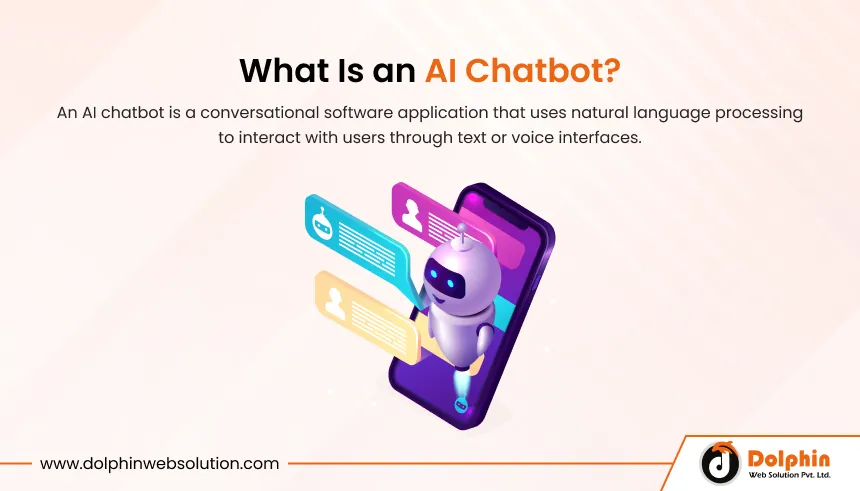
An AI chatbot is a conversational software application that uses natural language processing to interact with users through text or voice interfaces. These systems follow predetermined conversation flows and respond to user queries based on trained datasets and programmed rules.
Modern AI chatbots leverage machine learning to understand user intent and provide contextually relevant responses. They excel at handling high volumes of repetitive inquiries, offering instant responses 24/7 without human intervention. Common implementations include customer service portals, website chat widgets, messaging app integrations, and voice assistants.
How AI Chatbots Work
AI chatbots operate through a structured process that includes natural language understanding, intent recognition, response generation, and continuous learning from interactions. They analyze user input, match it against their knowledge base, and deliver appropriate responses from pre-configured options.
However, chatbots have inherent limitations. They typically cannot perform actions outside their conversation interface, lack autonomous decision making capabilities, and require human escalation for complex scenarios. Their effectiveness depends heavily on the quality of training data and the scope of their programmed responses.
What Is an AI Agent?
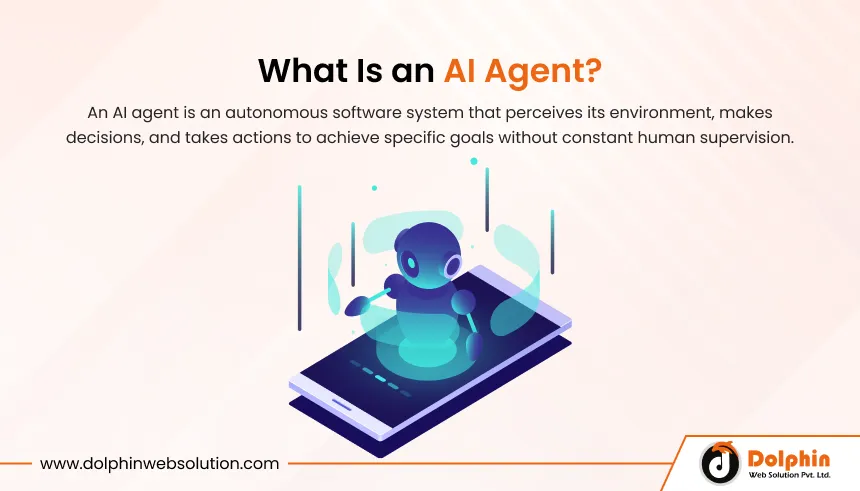
An AI agent is an autonomous software system that perceives its environment, makes decisions, and takes actions to achieve specific goals without constant human supervision, making AI Agent Development essential for building intelligent and self-driven digital solutions. Unlike chatbots that primarily facilitate conversations, AI agents actively execute tasks, orchestrate workflows, and integrate with multiple systems to complete complex operations.
AI agents possess advanced capabilities including contextual awareness, adaptive learning, multi-step reasoning, and proactive problem solving, which are core outcomes of mature AI Agent Development practices. They can analyze data from various sources, make informed decisions based on business rules, and automatically adjust their behavior based on outcomes and feedback.
Real World Examples
Financial institutions deploy AI agents for fraud detection and risk assessment, autonomously analyzing transaction patterns and flagging suspicious activities. Healthcare organizations use AI agents to coordinate patient care workflows, schedule appointments, manage medical records, and ensure regulatory compliance. Supply chain companies implement AI agents to optimize inventory management, predict demand fluctuations, and automatically reorder stock.
Manufacturing facilities leverage AI agents for predictive maintenance, monitoring equipment performance in real time and scheduling repairs before failures occur. These agents integrate with IoT sensors, maintenance systems, and production schedules to minimize downtime and maximize operational efficiency.
AI Agent vs Chatbot: Key Differences
Understanding the fundamental distinctions between AI agents and chatbots helps businesses select the appropriate technology for their specific requirements. The following comparison highlights critical differentiators across key dimensions.
| Feature | AI Chatbot | AI Agent |
|---|---|---|
| Primary Purpose | Conversational interaction and information delivery | Task execution and autonomous workflow management |
| Autonomy Level | Reactive, responds to user prompts | Proactive, initiates actions independently |
| Decision Making | Rule based, limited to conversation flow | Context aware, complex multi-step reasoning |
| System Integration | Minimal, typically standalone | Extensive, connects with multiple platforms and APIs |
| Learning Capability | Improves responses through training | Adapts strategies and refines decision processes |
| Scope of Action | Provides information, collects data | Executes transactions, modifies systems, orchestrates workflows |
| Complexity | Simpler architecture, faster deployment | Advanced architecture, requires sophisticated setup |
| Cost Range | $1,500 to $10,000+ | $8,000 to $400,000+ |
1. Autonomy and Independence
Chatbots require user initiation to function. They wait for questions or commands before responding and cannot independently identify problems or opportunities. AI agents operate continuously, monitoring systems and data streams to detect conditions requiring action. They can trigger workflows, send alerts, and execute predefined responses without human prompting.
2. Integration and Connectivity
AI chatbots typically operate within a single channel or platform with limited external connections. AI agents function as central orchestrators, connecting disparate systems including CRM platforms, ERP software, databases, analytics tools, and third party services. This integration capability enables comprehensive automation across entire business processes.
3. Learning and Adaptation
While chatbots improve their response accuracy through additional training data, their learning focuses on better conversation handling. AI agents employ reinforcement learning and outcome analysis to optimize their decision making strategies, continuously refining their approach based on results and changing conditions.
Use Cases of AI Chatbots
AI chatbots deliver significant value in scenarios requiring consistent, scalable customer interaction and information dissemination. Businesses across industries deploy chatbots to enhance customer experience while reducing operational costs.
1. Customer Support and Service
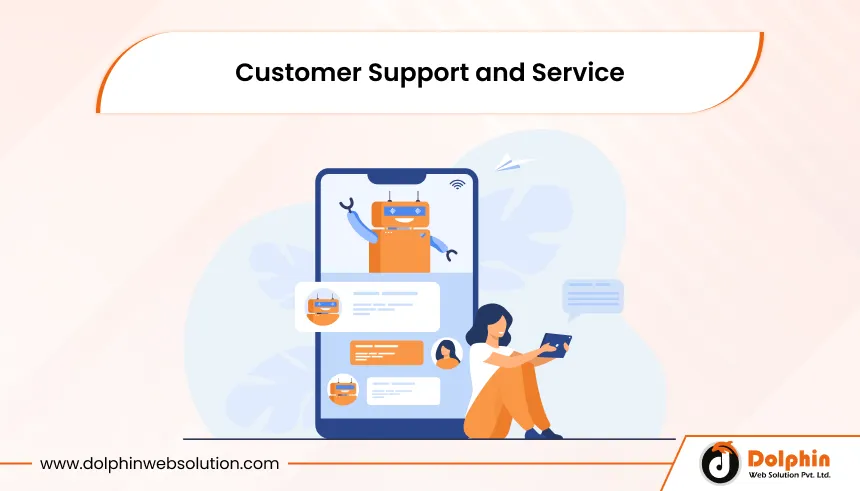
Chatbots handle first line customer inquiries, answering frequently asked questions about products, services, policies, and procedures. They resolve common issues like password resets, order tracking, and account information updates instantly. When encountering complex problems beyond their capabilities, they gather preliminary information and seamlessly escalate to human agents with full context.
2. Sales and Lead Qualification
Marketing teams use chatbots to engage website visitors, qualify leads through conversational forms, and schedule demonstrations with sales representatives. These bots collect prospect information, assess purchase intent, and route qualified leads to appropriate team members. They nurture prospects through automated follow ups and personalized content recommendations.
3. Appointment Booking and Scheduling
Healthcare providers, professional services firms, and service businesses implement chatbots to manage appointment calendars. Customers can check availability, book appointments, receive confirmations, and request rescheduling through natural conversation. The chatbot syncs with scheduling systems and sends automated reminders to reduce no shows.
4. Internal Helpdesk and HR Support
Organizations deploy internal chatbots to assist employees with IT support requests, HR policy questions, benefits enrollment, and administrative procedures. These bots reduce the burden on support teams by providing instant answers to routine inquiries and guiding employees through self service processes.
Use Cases of AI Agents
AI agents transform business operations by automating complex workflows and enabling intelligent decision making at scale. Their autonomous capabilities unlock efficiency gains impossible with traditional automation or chatbot solutions.
1. Business Process Automation
AI agents orchestrate end to end business processes that span multiple systems and departments. In accounts payable, they extract data from invoices, validate against purchase orders, route for approval, process payments, and update accounting records autonomously. They handle exceptions by applying business rules and escalating only truly complex situations.
2. Data Analysis and Reporting
Organizations leverage AI agents to continuously analyze business data, identify trends, detect anomalies, and generate actionable insights. These agents monitor key performance indicators in real time, automatically producing reports and dashboards for stakeholders. They can trigger alerts when metrics exceed thresholds and recommend corrective actions based on historical patterns.
3. Workflow Orchestration
AI agents coordinate complex workflows involving multiple teams, systems, and dependencies. In software development, they manage CI/CD pipelines, run automated tests, deploy code, monitor application performance, and rollback changes if issues arise. They adapt their approach based on test results and system feedback without manual intervention.
4. Intelligent Decision Systems
Financial services firms deploy AI agents for portfolio management, automatically rebalancing investments based on market conditions and risk parameters. Supply chain organizations use agents to dynamically adjust pricing, inventory levels, and distribution strategies in response to demand signals and external factors. These agents make thousands of optimized decisions daily that would be impossible for humans to manage effectively.
Cost Comparison: AI Agent vs Chatbot
Understanding development and operational costs helps businesses budget appropriately and calculate return on investment. Pricing varies significantly based on solution complexity, features, integrations, and vendor selection.
1. AI Chatbot Development Costs
| Solution Type | Cost Range (USD) | Typical Features |
|---|---|---|
| Basic Chatbot | $1,500 to $5,000 | Simple FAQ bot, limited integrations, rule based responses |
| Standard Chatbot | $5,000 to $15,000 | NLP capabilities, CRM integration, multi-channel support |
| Advanced Chatbot | $15,000 to $30,000+ | AI/ML powered, extensive integrations, analytics dashboard |
| Enterprise Chatbot | $30,000 to $100,000+ | Custom development, advanced NLP, multi-language, full platform integration |
Ongoing costs include hosting ($50 to $500 monthly), maintenance and updates ($500 to $2,000 monthly), and training data management. Third party platform fees like Dialogflow or Microsoft Bot Framework may add $100 to $1,000 monthly depending on usage volume.
2. AI Agent Development Costs
| Solution Type | Cost Range (USD) | Typical Capabilities |
|---|---|---|
| Basic Agent | $8,000 to $20,000 | Single workflow automation, limited decision making, basic integrations |
| Standard Agent | $20,000 to $50,000 | Multiple workflows, contextual awareness, API integrations, monitoring dashboard |
| Advanced Agent | $50,000 to $150,000 | Complex reasoning, extensive system integration, adaptive learning, analytics |
| Enterprise Agent | $150,000 to $400,000+ | Multi-agent systems, advanced AI/ML, comprehensive platform integration, custom logic |
AI agents typically require higher ongoing investment for infrastructure ($200 to $2,000 monthly), continuous training and optimization ($1,000 to $5,000 monthly), and system monitoring. Enterprise solutions may include dedicated support teams and SLA agreements adding significant recurring costs.
Factors Affecting Development Cost
1. Which Is Right for Your Business?
Selecting between AI agents and chatbots depends on your specific business objectives, operational requirements, technical infrastructure, and budget constraints. Many organizations benefit from deploying both technologies in complementary roles.
2. When to Choose a Chatbot
Chatbots excel when your primary need involves customer interaction and information exchange. If your goal is improving customer service accessibility, reducing response times, or handling high volumes of routine inquiries, a chatbot provides excellent ROI with lower implementation complexity.
Choose chatbots for lead generation and qualification where conversational engagement drives value. They work well for appointment scheduling, FAQ management, and basic data collection. Businesses with limited technical resources or budget constraints should start with chatbots to gain automation experience before advancing to more complex solutions.
3. When to Choose an AI Agent
AI agents become essential when you need autonomous task execution and workflow orchestration across multiple systems. Organizations facing complex operational challenges requiring real time decision making and adaptive responses benefit significantly from AI agents. If your processes involve data analysis, system integrations, and actions beyond simple information delivery, agents deliver substantially more value.
Businesses with mature digital infrastructure and technical capabilities can fully leverage AI agent potential. Companies seeking competitive advantage through operational excellence, predictive analytics, or intelligent automation should prioritize agent implementation. The higher investment delivers exponential returns in efficiency, accuracy, and scalability.
4. When to Use Both Together
The most powerful implementations combine chatbots and AI agents in integrated architectures. Chatbots serve as the conversational interface while AI agents handle backend operations and complex workflows. A customer facing chatbot collects information and initiates requests, then AI agents execute fulfillment processes autonomously.
This hybrid approach optimizes user experience while maximizing operational efficiency. Chatbots provide the accessible interface customers expect while agents deliver the sophisticated automation businesses require. Organizations following this strategy achieve comprehensive digital transformation with clear user touchpoints and robust backend capabilities.
5. Future Trends: AI Agents and Chatbots
The artificial intelligence landscape continues evolving rapidly with emerging capabilities that will reshape business operations. Understanding upcoming trends helps organizations prepare their technology strategies and avoid obsolescence.
6. Multi-Agent Systems
Organizations are moving beyond single agent deployments toward coordinated multi-agent architectures. These systems feature specialized agents handling different domains that communicate and collaborate to accomplish complex objectives. Financial institutions deploy agent teams where one analyzes market data, another manages risk, and a third executes trades based on collective intelligence.
Research indicates that 40 percent of enterprise applications will feature task specific AI agents by 2026, representing massive growth from less than 5 percent in early 2025. This proliferation will drive standardization of agent communication protocols and orchestration frameworks.
7. Generative AI Integration
Large language models and generative AI capabilities are transforming both chatbots and agents. Next generation chatbots will generate contextually rich, personalized responses rather than selecting from predetermined options. AI agents will leverage generative AI for creative problem solving, developing novel solutions to unexpected challenges rather than following rigid decision trees.
Industry projections show that 95 percent of customer interactions will be AI powered by 2025, with generative capabilities enabling more natural, effective communication. Businesses must prepare for this shift by investing in platforms supporting modern AI integration.
8. Autonomous Enterprise Systems
The ultimate evolution leads toward fully autonomous enterprise systems where AI agents manage entire business functions with minimal human oversight. These systems will optimize operations continuously, predict future needs proactively, and adapt to changing conditions automatically.
Early adopters in logistics, manufacturing, and financial services are already piloting autonomous systems showing dramatic efficiency improvements. As technology matures and trust builds, autonomous operations will expand across industries and business functions. Companies establishing AI agent foundations today position themselves to lead this transformation.
Conclusion
Understanding the fundamental differences between AI agents and chatbots empowers businesses to make strategic technology investments aligned with operational goals, a process often guided by expert AI Consulting. Chatbots excel at customer interaction and information delivery with lower complexity and cost, while AI agents provide autonomous workflow execution and intelligent decision making for comprehensive business transformation.
Most organizations benefit from thoughtfully combining both technologies, leveraging chatbots for customer facing interactions while deploying AI agents for backend operations and complex processes. The key lies in accurately assessing your business requirements, technical capabilities, and strategic objectives before selecting solutions.
As artificial intelligence continues advancing rapidly, early adopters gain significant competitive advantages through improved efficiency, enhanced customer experiences, and data driven decision making. The investment in AI automation delivers compounding returns as systems learn and optimize over time.
Contact Dolphin Web Solution today to build scalable, secure, and future ready AI solutions tailored to your business needs. Our expert team will help you navigate the AI landscape and implement technologies that drive measurable results.

Frequently Asked Questions (FAQs)
Is an AI agent better than a chatbot?
AI agents and chatbots serve different purposes rather than one being universally better. Agents excel at autonomous task execution and complex workflow orchestration while chatbots specialize in conversational interaction. The better choice depends on whether your primary need involves customer communication or operational automation. Many businesses benefit from implementing both technologies in complementary roles.
Can a chatbot be part of an AI agent system?
Yes, chatbots commonly function as the user interface component within broader AI agent architectures. The chatbot handles customer facing conversations and data collection while AI agents execute backend workflows and business processes. This integration provides accessible user experiences combined with sophisticated automation capabilities. Leading implementations feature seamless handoffs between conversational and operational components.
Which is more expensive, AI agent or chatbot development?
AI agent development typically costs significantly more than chatbots, ranging from $8,000 to $400,000+ compared to $1,500 to $30,000+ for chatbots. The higher cost reflects greater complexity, extensive system integrations, advanced decision making capabilities, and sophisticated architecture. However, AI agents often deliver higher ROI through operational efficiency gains and automation of complex processes that chatbots cannot handle.
How long does AI chatbot or agent development take?
Basic chatbot development takes 4 to 8 weeks while standard implementations require 8 to 16 weeks. Advanced chatbots may need 16 to 24 weeks for custom development. AI agents typically require longer timelines: basic agents take 8 to 12 weeks, standard agents need 12 to 24 weeks, and complex enterprise agents may require 6 to 12 months. Timeline depends on scope, integrations, and customization requirements.
Which industries benefit most from AI agents and chatbots?
Healthcare organizations leverage both for patient engagement and care coordination. Financial services use them for customer support and fraud detection. Retail and e-commerce deploy chatbots for sales assistance and agents for inventory management. Manufacturing implements agents for predictive maintenance and supply chain optimization. Professional services firms use chatbots for client communication and agents for workflow automation. Nearly every industry finds valuable applications for these technologies.
Do AI agents require constant human supervision?
Modern AI agents operate autonomously within defined parameters and business rules, requiring minimal human oversight for routine operations. They handle standard scenarios independently and escalate exceptional situations requiring human judgment. Organizations typically implement monitoring dashboards to track agent performance and outcomes rather than supervising individual decisions. As agents learn and improve, supervision requirements decrease while trust and autonomy increase.
Can small businesses afford AI agents and chatbots?
Small businesses can absolutely benefit from AI automation with appropriate solution selection. Basic chatbots starting around $1,500 to $5,000 deliver excellent ROI for customer service and lead generation. Cloud based platforms offer subscription models reducing upfront investment. Starting with focused chatbot implementation and gradually expanding to agents as business grows represents a practical approach. Many vendors including Dolphin Web Solution offer flexible pricing and phased implementation to accommodate smaller budgets while delivering meaningful business value.
Jigar Shah


Jigar Shah serves as the Chief Operating Officer of Dolphin Web Solution, overseeing business operations, project delivery, client success, and organizational growth initiatives. With more than 15 years of experience in the IT and digital services industry, he plays a vital role in ensuring operational excellence and delivering exceptional outcomes for global clients. His expertise spans strategic planning, project management, process optimization, resource management, and technology operations. Jigar has successfully managed complex eCommerce, AI, web, and mobile application projects while building scalable processes that support sustainable business growth. Passionate about leadership and continuous improvement, Jigar focuses on creating efficient systems, empowering teams, and maintaining the highest standards of quality. He frequently shares perspectives on digital transformation, project execution, operational efficiency, and business growth strategies.

We can help you with
- Dedicated Team
- Setup Extended Team
- Product Development
- Custom App Development
Our Offices

AHMEDABAD (INDIA)
B- 203-206, Empire Business Hub, Science City Road, Sola, Ahmedabad – 380060

BERLIN (GERMANY)
Badensche Str. 28, 10715 Berlin, Germany

CALIFORNIA (USA)
9601 Reseda Blvd, Apt#223, Northridge CA-91324, USA

ALBERTA (CANADA)
302 Skyview Ranch Drive NE, Calgary, Alberta, Canada T3N0P5





Hello!
Click one of our contacts below to chat on WhatsApp