
-
Dolphin Web SolutionShopifyWooCommerce vs Shopify: Which Platform is Best for Your Online Store?
 15 Min Read
WooCommerce vs Shopify: Which Platform is Best for Your Online Store?


Table of Contents
 Show
Show

Summary :
WooCommerce and Shopify are the two most popular ecommerce platforms powering millions of online stores worldwide. This comprehensive analysis compares their key features, pricing structures, customization capabilities, ease of use, and scalability to help businesses make an informed decision. While WooCommerce offers unlimited flexibility and lower ongoing costs for WordPress users, Shopify provides an all-in-one solution with superior ease of use and built-in hosting, making the choice dependent on technical expertise, budget, and business requirements.
Introduction
The ecommerce industry has experienced unprecedented growth, with global online sales expected to reach $6.3 trillion by 2024. This explosive expansion has created countless opportunities for businesses to establish their digital presence and tap into the vast online marketplace. However, with this opportunity comes a critical decision that can make or break your online success: choosing the right ecommerce platform.
Your platform choice affects everything from initial setup costs and ongoing expenses to design flexibility, scalability potential, and long-term growth prospects. It determines how easily you can manage your inventory, process payments, optimize for search engines, and provide excellent customer experiences.
Among the numerous ecommerce solutions available today, WooCommerce and Shopify have emerged as the two dominant platforms, collectively powering millions of online stores worldwide. WooCommerce, as a WordPress plugin, offers unparalleled customization and control for those comfortable with the WordPress ecosystem. Shopify, as a fully hosted solution, provides simplicity and comprehensive built-in features for businesses wanting an all-in-one approach.
Understanding the strengths and limitations of each platform is essential for making an informed decision that aligns with your business goals, technical capabilities, and budget constraints.
What is WooCommerce?
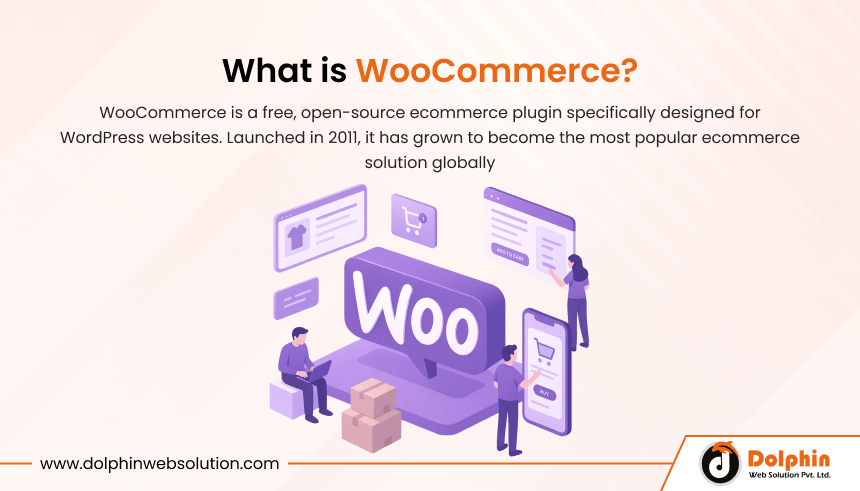
WooCommerce is a free, open-source ecommerce plugin specifically designed for WordPress websites. Launched in 2011, it has grown to become the most popular ecommerce solution globally, powering over 28% of all online stores. As a plugin, WooCommerce transforms any WordPress site into a fully functional online store, leveraging the robust content management capabilities that WordPress is known for.
Key Strengths of WooCommerce
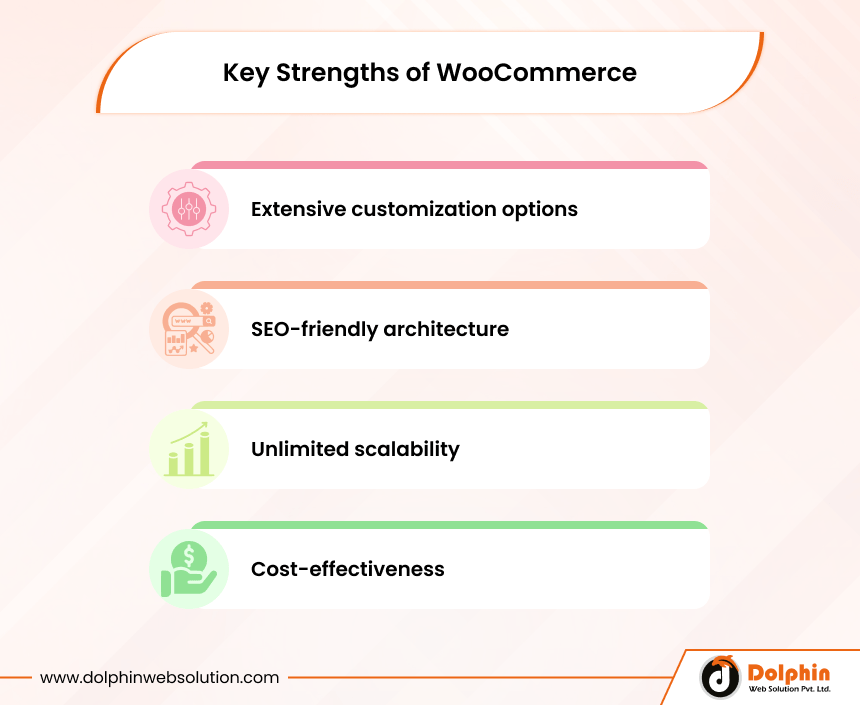
The platform’s open-source nature provides complete control over your store’s functionality and design. You can modify source code, customize features extensively, and integrate with virtually any third-party service without restrictions. This flexibility makes WooCommerce suitable for unique business requirements that might not be accommodated by closed platforms.
1. Extensive customization options
Represent another major advantage. WooCommerce offers over 900 official extensions plus access to WordPress’s library of 59,000+ plugins. This vast ecosystem allows you to add everything from advanced inventory management and customer relationship tools to sophisticated marketing automation and SEO optimization features.
2. SEO-friendly architecture
Gives WooCommerce a significant advantage over many competitors. Built on WordPress, which is inherently SEO-optimized, WooCommerce stores benefit from superior search engine visibility. The platform provides complete control over meta tags, URL structures, and content optimization, essential for organic search traffic growth.
3. Unlimited scalability
Without artificial restrictions means you can add as many products as your hosting infrastructure can support. There are no platform-imposed limits on inventory size, making WooCommerce suitable for businesses planning significant growth.
4. Cost-effectiveness
Appeals to budget-conscious businesses. While the core plugin is free, you only pay for hosting, premium extensions, and professional services you actually need. This approach often results in lower total costs compared to subscription-based platforms, especially for established businesses.
What is Shopify?
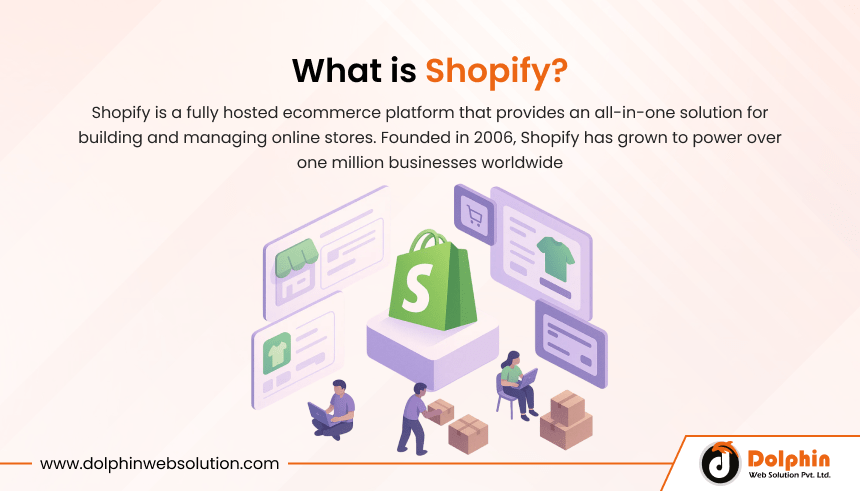
Shopify is a fully hosted ecommerce platform that provides an all-in-one solution for building and managing online stores. Founded in 2006, Shopify has grown to power over one million businesses worldwide, ranging from small startups to large enterprises. The platform handles hosting, security, payment processing, and core ecommerce functionality, allowing merchants to focus on running their businesses rather than managing technical infrastructure.
Key Strengths of Shopify
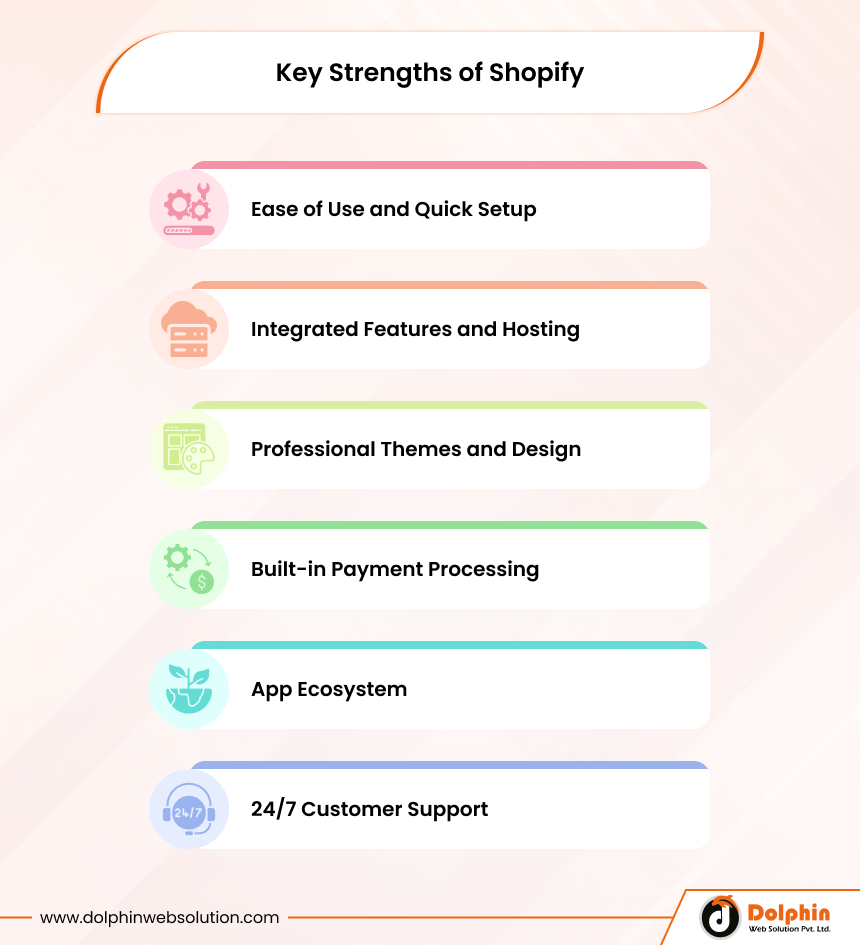
Shopify’s fully hosted infrastructure eliminates the hassle of server management, security, and updates, allowing you to focus entirely on growing your business. Its intuitive interface and extensive app marketplace enable you to customize features, add integrations, and enhance functionality without deep technical expertise.
1. Ease of Use and Quick Setup
Shopify’s primary strength lies in its exceptional ease of use. The platform requires no technical knowledge or coding skills, making it accessible to entrepreneurs without technical backgrounds. The intuitive drag-and-drop interface allows users to set up professional-looking stores quickly, often within hours rather than days or weeks.
2. Integrated Features and Hosting
Unlike WooCommerce, Shopify includes comprehensive hosting and security in all plans. This means automatic SSL certificates, PCI DSS compliance, and enterprise-level security measures are built-in. Users don’t need to worry about server management, security updates, or performance optimization, as Shopify handles these technical aspects automatically.
3. Professional Themes and Design
The platform offers over 200 professional themes, both free and premium, designed specifically for ecommerce. These themes are mobile-responsive and optimized for conversions, providing attractive storefronts without requiring design expertise.
4. Built-in Payment Processing
Shopify Payments, the platform’s integrated payment solution, supports all major credit cards and digital payment methods. This integration eliminates the need for third-party payment gateway setup and reduces transaction fees when used with Shopify’s own payment processing.
5. App Ecosystem
The Shopify App Store contains over 8,000 applications covering everything from inventory management and customer service to marketing automation and analytics. This extensive ecosystem allows businesses to add functionality as needed without custom development.
6. 24/7 Customer Support
All Shopify plans include round-the-clock customer support via phone, email, and live chat. This comprehensive support system provides peace of mind for business owners who need assistance with technical issues or platform questions.
WooCommerce vs Shopify Comparison
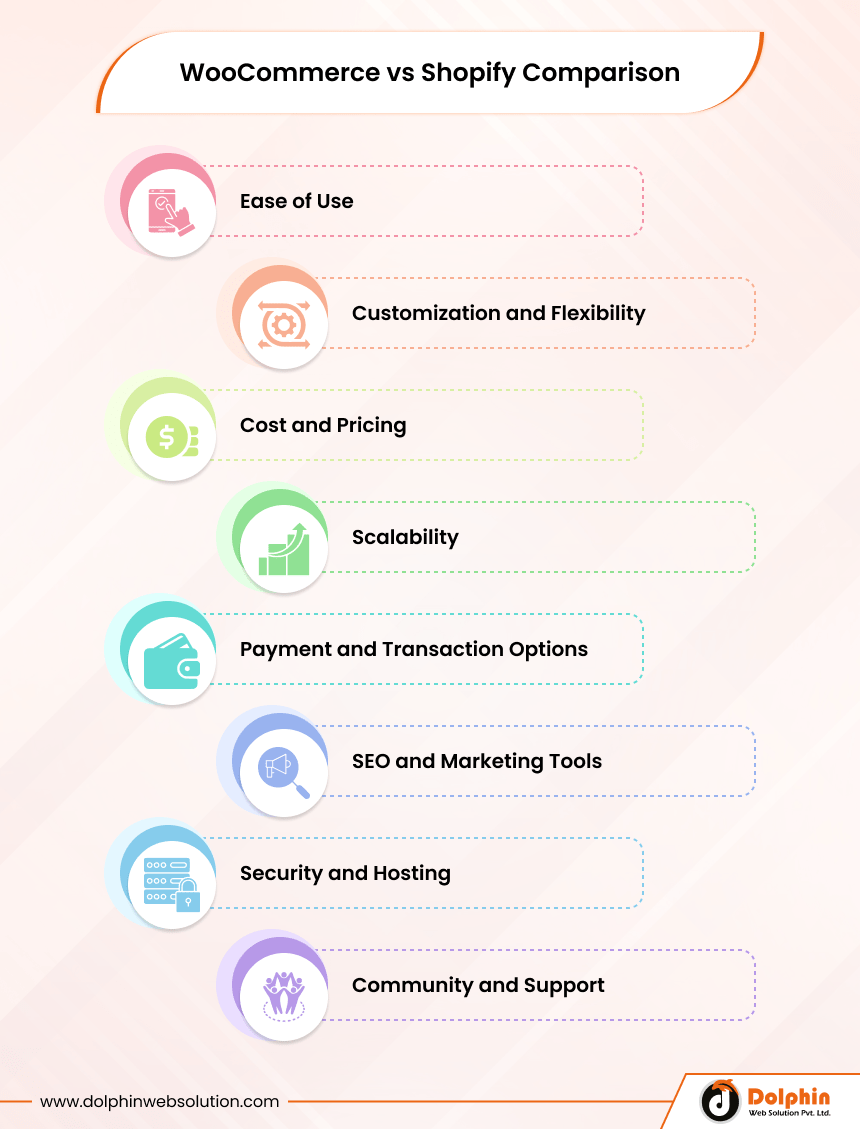
1. Ease of Use
Shopify: Clearly wins in this category with its intuitive, user-friendly interface designed for non-technical users. The platform’s setup wizard guides users through store creation, product addition, and payment configuration with minimal complexity. The drag-and-drop editor makes customization straightforward, and most essential features work out of the box without additional configuration.
WooCommerce: Requires more technical knowledge and setup time. Users must first have a WordPress site, install the plugin, configure hosting, set up payment gateways, and often install additional plugins for full functionality. While not impossibly complex, it demands more hands-on involvement and technical understanding, making it less suitable for complete beginners.
2. Customization and Flexibility
WooCommerce: Excels in customization capabilities, offering unlimited flexibility through direct code access and extensive plugin ecosystem. You can modify any aspect of your store’s functionality, create custom product types, integrate with any external system, and build unique customer experiences. The platform places no restrictions on customization depth or complexity.
Shopify: Provides good customization options through themes and apps but has limitations compared to open-source solutions. Advanced customizations often require knowledge of Shopify’s Liquid templating language or hiring developers. While sufficient for most businesses, some unique requirements may be impossible to implement within Shopify’s framework.
3. Cost and Pricing
WooCommerce: Offers a more complex but potentially cost-effective pricing structure. The core plugin is free, but total costs include hosting ($20-$500 monthly), domain registration ($10-20 annually), premium themes ($50-200), essential plugins ($0-500 annually), and security measures ($100-300 annually). For established businesses with technical expertise, total costs often remain lower than subscription platforms.
Shopify: Uses a straightforward subscription model with plans ranging from $5 monthly (Starter) to $399 monthly (Advanced), plus transaction fees of 0.6% to 2.9% depending on the plan. While predictable, these costs can become significant for high-volume businesses, especially when factoring in app subscriptions and premium themes.
4. Scalability
WooCommerce: Offers unlimited scalability potential but requires technical expertise to implement effectively. As your store grows, you’ll need to upgrade hosting, optimize databases, manage caching, and monitor performance manually. While more complex, this approach provides complete control over scaling strategies and potentially lower long-term costs.
Shopify: Provides seamless scalability with automatic infrastructure management. The platform handles traffic spikes, server optimization, and performance monitoring automatically. Upgrading involves simply switching to a higher-tier plan, making scalability straightforward for non-technical users.
5. Payment and Transaction Options
WooCommerce: Provides more payment flexibility with no platform transaction fees. You can integrate any payment gateway directly, often achieving better rates through direct negotiations with processors. The platform includes built-in support for major gateways like PayPal and Stripe, with hundreds of additional options available through plugins.
Shopify: Includes integrated payment processing through Shopify Payments with competitive rates (2.4% to 2.9% plus fixed fees). The platform supports over 100 payment gateways globally and handles PCI compliance automatically. However, using third-party payment processors incurs additional transaction fees of 0.6% to 2% depending on your plan.
6. SEO and Marketing Tools
WooCommerce: Delivers superior SEO capabilities through WordPress integration. The platform provides complete control over meta tags, URL structures, schema markup, and content optimization. Combined with powerful plugins like Yoast SEO, WooCommerce stores typically achieve better organic search rankings.
Shopify: Offers basic SEO features with some limitations. While adequate for most businesses, the platform provides less control over technical SEO elements like URL structures and content management. Marketing features focus primarily on social media integration and basic email marketing tools.
7. Security and Hosting
WooCommerce: Places security responsibility on store owners. You must secure hosting, maintain SSL certificates, implement security plugins, and manage updates regularly. While this provides complete control, it also requires ongoing technical attention and expertise.
Shopify: Includes comprehensive security and hosting in all plans. SSL certificates, PCI DSS compliance, DDoS protection, and automatic security updates are built-in features. The platform maintains enterprise-level security standards without requiring user intervention.
8. Community and Support
WooCommerce: Relies on community support, documentation, and forums for assistance. While the community is large and active, support quality can vary, and response times may be longer than professional support services. Many users supplement community support with paid professional services.
Shopify: Provides professional 24/7 support through multiple channels, extensive documentation, and a large community of users and developers. The centralized support system ensures consistent help quality and rapid response times.
When to Choose WooCommerce
WooCommerce represents the ideal choice for specific business scenarios where flexibility, control, and cost-effectiveness take precedence over simplicity and convenience.
1. Businesses Already Using WordPress
If your business already operates a WordPress website, WooCommerce integration becomes seamless and cost-effective. You can leverage existing content, maintain consistent branding, and manage both your website and store from a single dashboard. This integration eliminates the need for separate platforms and reduces overall maintenance complexity.
2. Requirements for Extensive Customization
Companies with unique business models, complex product configurations, or specific workflow requirements benefit from WooCommerce’s unlimited customization capabilities. Whether you need custom product types, specialized pricing structures, or integration with existing business systems, WooCommerce’s open-source architecture accommodates virtually any requirement.
3. Budget-Conscious Growing Businesses
Startups and growing businesses that want to minimize ongoing subscription costs often find WooCommerce more economical. With careful planning and technical expertise, you can build a professional store with lower long-term operating expenses compared to subscription-based platforms. As your business grows, you retain control over scaling costs and technology choices.
4. SEO and Content Marketing Focus
Businesses that prioritize organic search traffic and content marketing benefit significantly from WooCommerce’s SEO advantages. The WordPress foundation provides superior content management capabilities, better search engine optimization tools, and more flexible content strategies compared to traditional ecommerce platforms.
5. Technical Teams or Access to Developers
Organizations with in-house technical expertise or reliable development partners can fully leverage WooCommerce’s capabilities. Technical teams can implement custom solutions, optimize performance, and maintain the store effectively while avoiding the limitations of hosted platforms.
When to Choose Shopify
Shopify serves as the optimal solution for businesses prioritizing simplicity, reliability, and rapid deployment over technical control and customization depth.
1. Beginners and Non-Technical Users
Entrepreneurs without technical backgrounds or those who prefer focusing on business operations rather than technical management find Shopify ideal. The platform’s intuitive interface, guided setup process, and automatic technical management eliminate barriers that might prevent business launch.
2. Businesses Needing Quick Time-to-Market
Companies requiring rapid store deployment benefit from Shopify’s streamlined setup process. You can launch a professional-looking store within hours, complete with payment processing, security, and mobile optimization. This speed advantage proves valuable for time-sensitive launches or seasonal businesses.
3. Preference for All-Inclusive Solutions
Businesses that prefer predictable monthly costs and comprehensive service inclusion often choose Shopify. The platform bundles hosting, security, payment processing, and support into single monthly fees, simplifying budgeting and vendor management.
4. High-Growth Businesses with Variable Traffic
Companies experiencing rapid growth or seasonal traffic spikes benefit from Shopify’s automatic scaling capabilities. The platform handles traffic surges, performance optimization, and infrastructure management without requiring technical intervention or advance planning.
5. Focus on Selling Rather Than Technology
Merchants who want to concentrate entirely on sales, marketing, and customer service without technical distractions find Shopify’s managed approach appealing. The platform handles technical aspects automatically, allowing complete focus on business growth and customer relationships.
Which is the Better Choice
Determining the superior platform depends entirely on your specific business context, technical capabilities, and long-term objectives rather than any inherent superiority of either solution.
Choose WooCommerce if: You prioritize complete control, extensive customization capabilities, and long-term cost optimization. This platform suits businesses with technical expertise, unique requirements, or existing WordPress infrastructure. The investment in technical learning and setup complexity pays dividends through lower ongoing costs, unlimited flexibility, and superior SEO capabilities.
Choose Shopify if: You value simplicity, reliability, and professional support over technical control. This platform serves businesses wanting rapid deployment, predictable costs, and comprehensive technical management. The higher ongoing costs represent payment for convenience, professional support, and automatic technical maintenance.
Consider your technical resources: Honestly. WooCommerce rewards technical investment with greater flexibility and control, while Shopify provides professional results without technical expertise requirements.
Evaluate long-term costs: Carefully. WooCommerce often proves more economical for established businesses with technical capabilities, while Shopify’s predictable costs suit businesses preferring operational simplicity.
Factor in growth plans: Both platforms scale effectively but through different approaches. WooCommerce provides unlimited scaling potential with technical complexity, while Shopify offers automatic scaling with plan-based cost increases.
The choice ultimately reflects your business philosophy: technical control and optimization versus operational simplicity and professional management.
Conclusion
Both WooCommerce and Shopify represent excellent ecommerce solutions that have enabled thousands of businesses to succeed online. Each platform offers distinct advantages that serve different business needs and preferences.
WooCommerce excels in providing unlimited flexibility, extensive customization options, superior SEO capabilities, and potentially lower long-term costs for businesses with technical expertise. Its open-source nature and WordPress integration make it ideal for content-driven businesses, unique requirements, and organizations prioritizing complete control over their ecommerce experience.
Shopify delivers exceptional ease of use, comprehensive built-in features, automatic technical management, and professional support that enables rapid business launch and growth. Its all-in-one approach suits entrepreneurs prioritizing operational simplicity over technical control.
The decision between these platforms should align with your technical capabilities, budget preferences, customization requirements, and long-term business strategy. Neither choice represents a permanent commitment, as migration between platforms remains possible as business needs evolve.
For businesses seeking expert guidance in platform selection and implementation, partnering with an experienced ecommerce development company ensures optimal results regardless of platform choice. Professional WooCommerce development services can maximize the flexibility and customization potential of open-source solutions, while specialized Shopify development services can leverage the platform’s built-in capabilities for rapid deployment and scaling.
Our experienced team helps businesses choose the ideal solution based on their unique requirements, technical capabilities, and growth objectives. Whether you need flexible WooCommerce customization or streamlined Shopify deployment, we deliver professional results that drive online success. Contact Dolphin Web Solution today to transform your ecommerce vision into reality with the platform that perfectly fits your business needs.

Jigar Shah


Jigar Shah serves as the Chief Operating Officer of Dolphin Web Solution, overseeing business operations, project delivery, client success, and organizational growth initiatives. With more than 15 years of experience in the IT and digital services industry, he plays a vital role in ensuring operational excellence and delivering exceptional outcomes for global clients. His expertise spans strategic planning, project management, process optimization, resource management, and technology operations. Jigar has successfully managed complex eCommerce, AI, web, and mobile application projects while building scalable processes that support sustainable business growth. Passionate about leadership and continuous improvement, Jigar focuses on creating efficient systems, empowering teams, and maintaining the highest standards of quality. He frequently shares perspectives on digital transformation, project execution, operational efficiency, and business growth strategies.

We can help you with
- Dedicated Team
- Setup Extended Team
- Product Development
- Custom App Development
Our Offices

AHMEDABAD (INDIA)
B- 203-206, Empire Business Hub, Science City Road, Sola, Ahmedabad – 380060

BERLIN (GERMANY)
Badensche Str. 28, 10715 Berlin, Germany

CALIFORNIA (USA)
9601 Reseda Blvd, Apt#223, Northridge CA-91324, USA

ALBERTA (CANADA)
302 Skyview Ranch Drive NE, Calgary, Alberta, Canada T3N0P5





Hello!
Click one of our contacts below to chat on WhatsApp