
-
Dolphin Web SolutionEcommerceWhat Is Digital Commerce? All You Need to Know
 15 Min Read
What Is Digital Commerce? All You Need to Know


Table of Contents
 Show
Show

Summary :
Digital commerce is reshaping the retail industry and transforming the way people do shopping. Online shopping has become the most preferred way for customers to buy products. So, if retailers haven't adapted to this evolving shift, it's time to know the true potential of digital commerce and its importance.
When it comes to digitalization, one industry that has had a significant impact is retail. This is where the era of digital commerce begins. And now, digital commerce is one of the biggest sectors globally.
According to stats, digital commerce is expected to surpass sales of around $6.3 trillion in 2024. This shows how big digital commerce is and how retailers rapidly shift towards it for business growth.
More than 2.71 billion people shop online, and the number will grow over time. However, many retailers are still unaware of the potential of digital commerce and why it’s needed for future retail.
In this blog, we will understand everything about digital commerce, its importance, benefits, and the latest trends that shape the future of retail. Let’s dive in!
What Is Digital Commerce?
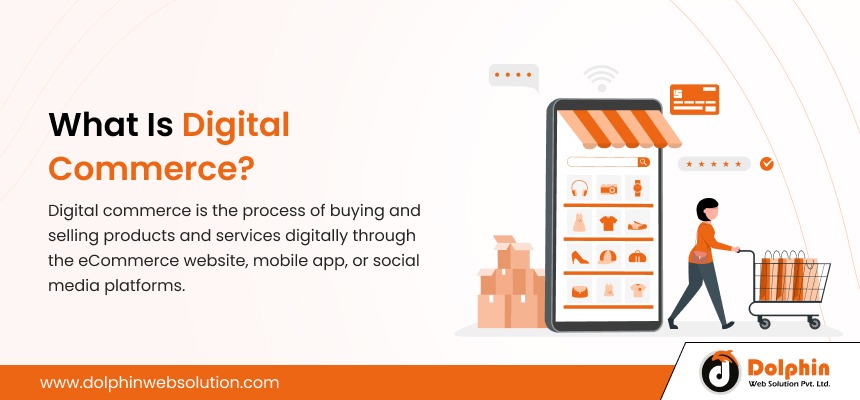
Digital commerce is the process of buying and selling products and services digitally through the eCommerce website, mobile app, or social media platforms. It includes online shopping, making payments electronically, promoting products through digital marketing, and managing customer information to improve business operations.
Importance of Digital Commerce
In the early 1990s, the internet became widely popular, and platforms like Amazon and eBay showed up and changed how people shop previously. This gives customers so much convenience that it becomes a preferred option for shopping online rather than in-store visits.
When eCommerce platforms arise, they directly impact retail businesses because customers prefer online shopping over in-store visits.
Today, digital commerce is becoming a crucial part of eCommerce. Retailers are switching to digital commerce to stay competitive with fast digitalization.
Digital commerce allows retailers to expand their customer reach and sell products and services globally. It helps retailers overcome geographical limitations and explore the global market. Additionally, online stores help them run their business 24/7, so customers can buy anytime.
This rapid shift is changing how people shop and how retailers operate. The importance of digital commerce will continue to grow over time.
Key Components of Digital Commerce

Here are the key components of Digital Commerce:
1. Online Marketplaces
Online marketplaces are platforms where many sellers offer their products to customers in one place. So that customers can explore a wide variety of products from different merchants and make purchases.
2. Online Retail (E-Retail)
Online retail refers to businesses selling their products directly to customers through websites or eCommerce stores. Unlike marketplaces, these businesses don’t depend on other marketplaces and build their own website to get full control to ensure how the store looks and feels.
3. Mobile Commerce (M-Commerce)
Mobile commerce allows people to do online shopping through their smartphones or tablets. Nowadays, businesses are building mobile apps so that mobile users can easily access their products and make shopping smooth.
4. Digital Marketing
Digital marketing is a big alternative to traditional marketing. It allows businesses to digitally promote their products or services to targeted customers by running ads on search engines like Google and social media platforms like Instagram. These marketing strategies are more personalized than traditional ones and help businesses improve conversions.
5. Supply Chain Management
Supply chain management is about ensuring all the products are delivered to customers quickly and efficiently. It includes inventory, processing orders, and organizing deliveries, all with the help of technology. And most businesses are adapting supply chain management systems to enhance the efficiency of their operations.
6. Electronic Data Interchange (EDI)
EDI is a way for businesses to send important documents like orders or invoices digitally instead of traditional paper. So that documents can be shared quickly, save time, and reduce errors.
7. Social Commerce
Social commerce refers to online shopping directly from social media platforms like Instagram or Facebook. It allows customers to buy products directly through social channels. It makes online shopping more interactive and engaging.
Benefits of Digital Commerce
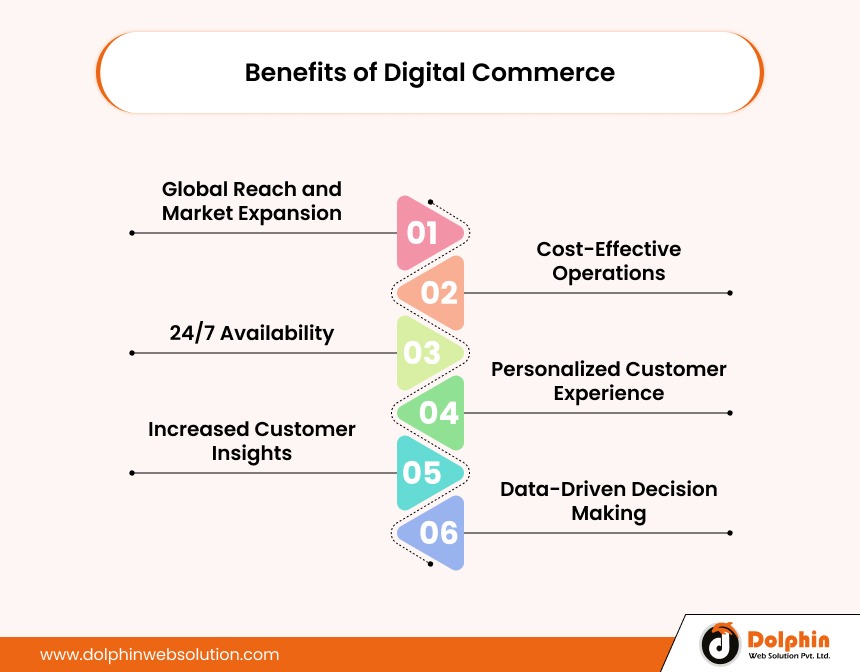
Here are some major benefits of adopting digital commerce:
1. Global Reach and Market Expansion
One of the retailers’ biggest benefits of digital commerce is global reach and market expansion. This means digital commerce allows businesses to remove geographical limitations and reach customers worldwide.
2. Cost-Effective Operations
Running an online store is more cost-effective than running a physical store. Retailers with physical locations must handle expenses like rent, utilities, staff, machines, etc. On the other hand, setting up an online store is easier because most things are automated, and there’s no need to handle expenses like physical ones.
3. 24/7 Availability
Another major benefit businesses are getting with digital commerce is 24/7 availability. Unlike physical stores, which run for limited hours, digital commerce keeps your online store running 24/7. So that shoppers from worldwide can shop anytime, anywhere digitally.
4. Personalized Customer Experience
Digital commerce is turning small businesses into brands, and the key reason behind it is personalized customer experience. Unlike traditional physical stores catering to their in-store customers, companies can utilize digital marketing campaigns to reach customers and provide customized experiences like offering discounts, recommending relevant products, providing useful content, etc.
5. Increased Customer Insights
When running an online store, businesses can collect their customers’ valuable data, such as behavior, preferences, and buying habits. This information is very helpful for their businesses to make better marketing campaigns and drive better conversions.
6. Data-Driven Decision Making
Digital platforms also provide various valuable insights about customers and store performance. So that businesses can make informed decisions and stay updated with the growing market.
Types of Digital Commerce
1. Active Digital Commerce
This type of digital commerce involves businesses that sell their products or services online and also accept payments directly through websites or platforms. This means this business is completely online and allows customers to do everything from selecting products to buying them online.
2. Passive Digital Commerce
In this type, businesses promote their products or services online but don’t accept payments digitally. Customers place orders online, but payments like cash or bank transfers are made offline.
Challenges in Digital Commerce
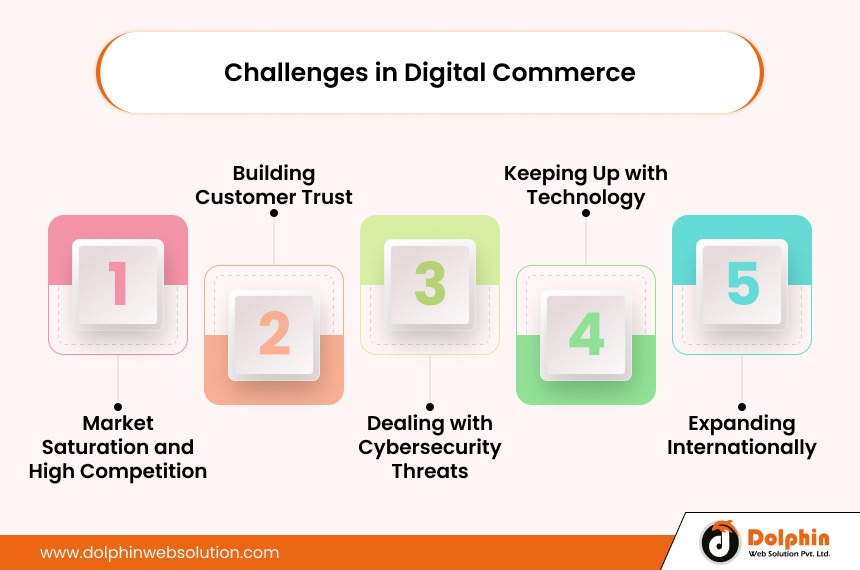
Here are some key challenges in digital commerce:
1. Market Saturation and High Competition
Despite the countless benefits of digital commerce, one of the key challenges businesses face is market saturation and high competition. Those who understood the potential of digital commerce earlier are now leading the ecommerce industry. It becomes tough to enter as a new player in this market. Businesses must focus on unique products, target audiences, and exceptional quality to stand out and make space.
2. Building Customer Trust
Building customer trust is another challenge businesses face, especially with online scams and data privacy. So, merchants must be transparent, secure, and more personalized to cater to their customers and win their trust.
3. Dealing with Cybersecurity Threats
As digitalization grows, so do cybersecurity threats. Businesses need to understand cybersecurity threats like data breaches and fraud in digital commerce and take certain steps to protect from these challenges by encrypting, making regular updates, and complying with privacy laws to protect themselves and their customers.
4. Keeping Up with Technology
Technology will continuously evolve, and businesses that are unable to adapt to changing technologies will not be able to stay competitive. However, staying updated with technology isn’t easy and includes various challenges that must be handled.
5. Expanding Internationally
Going global seems good, but businesses who are going global face several challenges like dealing with multiple languages, currencies, legal rules, cultural differences, and international shipping and logistics, which makes it challenging for businesses to expand globally.
Latest Trends in Digital Commerce
Here are some key trends in digital commerce:
- Augmented Reality (AR) and Virtual Reality (VR): AR allows customers to see products in real-world spaces, like trying furniture in the living room digitally through the app before purchasing the actual product. VR gives customers a fully immersive experience and makes online shopping more engaging.
- Artificial Intelligence and Machine Learning: AI and ML are crucial in evolving digital commerce. It helps businesses understand customers more efficiently, provide personalized recommendations, automate customer support (like chatbots), and improve inventory management.
- Voice Commerce: Nowadays, customers can shop online using voice commands. Voice commerce gives customers a hands-free experience and makes it easier to shop online than ever before.
- Social Commerce: Businesses now use social media channels like Instagram, Facebook, or Pinterest to sell their products directly through the app. This is a rapidly growing trend, and businesses prefer this approach to sell their products more quickly.
- Omnichannel Shopping Experiences: Omnichannel ensures customers get a smooth shopping experience across multiple platforms like websites, apps, physical stores, and social media with consistent branding.
- Mobile Commerce (M-Commerce): People prefer mobile devices like smartphones or tablets to do online shopping to ensure easy navigation, quick loading, and secure payments.
Conclusion
Overall, digital commerce is reshaping the retail industry by allowing businesses to expand globally, cater to customers worldwide, and unlock endless opportunities for their business growth. Businesses must adapt to digital commerce to stay competitive in today’s fast-growing world. We hope this guide helps you understand everything about digital commerce, its importance, and why it is needed in the future. So, if you’re a retailer planning to adapt to digital commerce, it’s the right time to hire an ecommerce development company and let the professional help you switch to digital commerce and unlock various opportunities for your business growth.

Rohit Prajapati


Rohit Prajapati is the Chief Executive Officer of Dolphin Web Solution and a recognized expert in eCommerce technologies, digital commerce strategy, and product development. With over 15 years of experience in the technology industry, he helps businesses build high-performing online stores, scalable digital platforms, and innovative customer experiences. As a certified Adobe Commerce Business Practitioner (Magento Solution Specialist), Rohit possesses deep expertise in Shopify, Magento, Shopware, Hyvä, and enterprise eCommerce ecosystems. He has successfully consulted businesses worldwide on platform selection, digital transformation, migration strategies, and growth-focused commerce solutions. Rohit regularly shares insights on eCommerce trends, AI-driven commerce, online business growth, and emerging technologies. His mission is to help organizations create future-ready digital experiences that drive measurable business outcomes and long-term success.

We can help you with
- Dedicated Team
- Setup Extended Team
- Product Development
- Custom App Development
Our Offices

AHMEDABAD (INDIA)
B- 203-206, Empire Business Hub, Science City Road, Sola, Ahmedabad – 380060

BERLIN (GERMANY)
Badensche Str. 28, 10715 Berlin, Germany

CALIFORNIA (USA)
9601 Reseda Blvd, Apt#223, Northridge CA-91324, USA

ALBERTA (CANADA)
302 Skyview Ranch Drive NE, Calgary, Alberta, Canada T3N0P5





Hello!
Click one of our contacts below to chat on WhatsApp